What Is Spaced Repetition? How It Works and Why It Beats Cramming
- What spaced repetition actually is
- Why spacing and retrieval work together
- There is no universal spaced-repetition schedule
- How an SRS turns answers into intervals
- How to use spaced repetition for a language
- Paper boxes and current tools
- Common mistakes that make spaced repetition fail
- Is spaced repetition worth it?
- Sources
What spaced repetition actually is
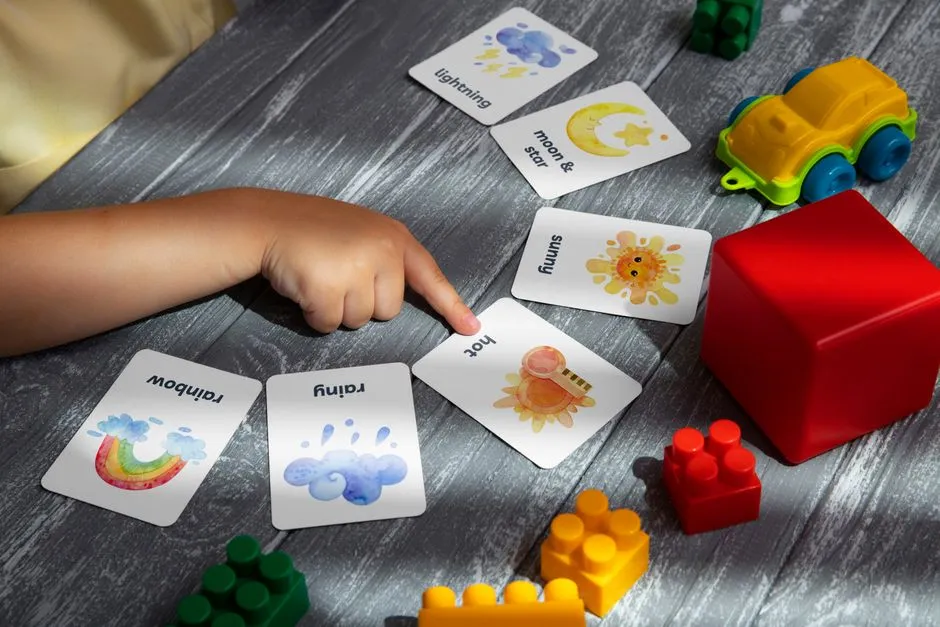
Spaced repetition is a study method that brings material back after time has passed instead of repeating it continuously in one sitting. Reviews are often placed at expanding or adaptive intervals: an item answered correctly waits longer, while a missed item returns sooner. The spacing matters, but so does the attempt to recall the answer. It is better to think of the method as scheduled retrieval than as a calendar that somehow knows the exact second a word will vanish.
A simple illustration might show a word today, again in two days, then in a week, three weeks, and a month later. That is an example, not a universal schedule. Actual timing depends on the item, the learner, prior review history, the scheduler, and how long the learner wants to retain it.
For language study, spaced repetition is particularly useful for discrete material: vocabulary, short phrases, characters, and conjugation forms. It can help a learner keep 2,000 words available more efficiently than ten consecutive readings of the same list. It cannot turn those words into spontaneous conversation by itself.
For a collection of 1,000 words, spaced review does not promise a fixed total time: card design, prior knowledge, and target recall matter. Likewise, 15 focused minutes may beat an hour of unfocused rereading, but not by arithmetic; the activity and schedule changed too.
Why spacing and retrieval work together
Two related effects do most of the work.
The spacing effect is the advantage often found when learning events are separated in time rather than massed together. In the 1880s—specifically 1885—Hermann Ebbinghaus's Über das Gedächtnis reported self-experiments with nonsense-syllable material and examined retention and forgetting over time. A quantitative review of distributed practice and later long-timescale research both support a retention benefit from spacing while showing that timing and test delay matter.
Retrieval practice, sometimes called the testing effect, is the act of trying to produce an answer before seeing it. Kathleen McDermott's 2021 research review concludes that retrieval practice shortly after learning can slow forgetting across different materials, ages, abilities, and test types. A good review therefore looks like a small test with feedback, not another leisurely reading of the answer.
The popular claim that memory strengthens most precisely at the edge of forgetting is too neat. A review of spacing over long timescales describes evidence both for and against that account and reports an inverted-U pattern: too little spacing can waste an exposure, but too much can leave retrieval unsuccessful. The best gap also changes with the intended retention delay.
Cramming and spaced repetition compared
| Factor | Cramming | Spaced repetition |
|---|---|---|
| Immediate familiarity | Often strong | Can feel less fluent during study |
| Delayed retention | Commonly weaker | Commonly stronger when the gap suits the later test |
| Activity | Repeated exposure, often recognition | Repeated attempts to retrieve |
| Session effort | Can feel easy | Usually more effortful |
| Best use | Immediate performance when no later use matters | Knowledge or vocabulary needed again |
Cramming can improve performance tomorrow; that does not establish durable learning six months later. Spacing is not automatically superior at every delay, for every task, or with every badly designed card. Its practical advantage is that it distributes successful retrievals across the period in which the material must survive.
There is no universal spaced-repetition schedule
Search results love calendars such as 1, 3, 7, 14, and 30 days because calendars are pleasantly obedient. Memory is less so. In a 2008 study of more than 1,350 people, the gap between study and review ranged up to 3.5 months and the final test occurred up to one year later. The gap that produced the best final performance became longer as the test delay grew. One fixed sequence cannot be optimal for every retention goal.
Here is the original article's simplified schedule, retained as a worked example rather than a prescription:
| Review | Example rating | Example next interval |
|---|---|---|
| Day 0 (learn) | — | 1 day |
| Day 1 | Good | 3 days |
| Day 4 | Good | 8 days |
| Day 12 | Good | 21 days |
| Day 33 | Good | about 2 months |
| Day 33, alternate result | Forgot | back to 1 day |
The table explains the loop: success can lengthen the next gap, while failure can shorten it. It does not tell you that every word should follow those dates. A familiar cognate and an unfamiliar character may produce different histories. A deadline next week and a language you hope to use for years also pose different scheduling problems.
If you use paper cards, choose a modest fixed schedule and adjust it when the pile becomes unmanageable. If you use software, begin with its documented defaults, grade consistently, and inspect your actual workload before changing parameters. Tuning every number on day one is a splendid way to spend an evening without learning a word.
How an SRS turns answers into intervals
A spaced repetition system (SRS) normally runs this loop:
- Show a prompt: a word, picture, sentence, or audio cue.
- Ask for recall before revealing the answer.
- Show the correct answer so the learner gets feedback.
- Record a rating or result.
- Use that history to set the next due date.
Schedulers do not all use the same calculation. The classic SM-2 algorithm starts items with an easiness factor, multiplies later intervals by that factor, and updates the factor from a 0–5 response grade. That corrects a common shorthand: the factor is not simply fixed forever. The original SuperMemo description gives initial intervals of 1 and 6 days and restarts the interval sequence after a response below 3.
FSRS (Free Spaced Repetition Scheduler) is an alternative to Anki's legacy SM-2 scheduler. The current Anki manual says FSRS fits parameters to review history and uses a desired-retention setting. Its default is 90%; raising that target creates shorter intervals and more reviews. Ninety percent is an Anki default and a workload choice, not a universal law of memory.
That distinction matters when you rate a card. In Anki's FSRS instructions, Hard means recalled with difficulty; Again means forgotten. Calling a failure “Hard” tells the scheduler the wrong thing and can produce intervals that are too long.
How to use spaced repetition for a language
The mechanics are easy. Keeping the system useful is the real craft.
- Review before adding. Clear due material first, then introduce new cards. Otherwise the deck grows while yesterday's learning quietly leaks out.
- Start with a small daily dose. Ten to fifteen minutes every day is a practical experiment; two hours on Sunday is a different study design. A 300-card deck can already feel enormous when its prompts are vague.
- Cap new cards by workload. Try 10–20 new cards per day only as a starting range, then reduce it if due reviews keep climbing. Adding 50 daily creates future reviews whether or not Future You has agreed to the arrangement.
- Recall actively. Say, type, or write the answer before revealing it. Recognition is not the same performance as production.
- Keep cards atomic. One clear test per card. A prompt that demands a word, gender, three meanings, and a full conjugation table is several tests wearing one coat.
- Add context. A short sentence can distinguish meanings and show grammar. Audio can test listening; an image can cue meaning without an English translation.
- Grade the attempt you made. If a hint supplied the answer, record a failure rather than the answer you wished you had produced.
For card construction rather than scheduling, use our full guide to effective flashcards. For context, imagery, and vocabulary selection, see how to memorize vocabulary.
Paper boxes and current tools
Spaced repetition does not require an app. In the Leitner system, paper cards move among boxes: successful cards advance to boxes reviewed less often, while missed cards return to a frequent-review box. It is the same broad principle administered by hand, and it works well for a small collection.
Digital tools become useful when the deck is too large to schedule comfortably on paper. Features and prices change, so verify the current product page before choosing or paying.
| Tool | Current cost model checked | What it offers |
|---|---|---|
| Anki ecosystem | Free desktop and AnkiDroid; AnkiMobile is a one-time iOS purchase | Custom cards, media, shared decks, and adaptive scheduling |
| AlgoApp (formerly AnkiApp) and similarly named apps | Separate products with their own terms | Do not assume compatibility with Anki, AnkiMobile, AnkiDroid, or AnkiWeb |
| Memrise | Limited free use; paid plans | Prepared language material and native-speaker video |
| Quizlet | Free account; optional subscriptions | Flashcard sets and multiple study modes |
| Clozemaster | Free play; optional Pro features | Sentence-based cloze practice with fixed review intervals |
| LingQ | Feature access varies by plan | Vocabulary review inside a reading-and-listening system |
The official Anki downloads page identifies the free desktop version, free contributor-developed AnkiDroid, and paid AnkiMobile. Its knockoff notice says AnkiApp is now AlgoApp and is outside the Anki ecosystem. Memrise documents free and paid access; Quizlet documents free accounts and subscriptions. Clozemaster and LingQ publish their own review schedules. None of that identifies one best tool. A system you understand and consistently use is more valuable than a feature list you admire from afar.
Common mistakes that make spaced repetition fail
- Memorizing isolated translations. “Table = mesa” is brittle because it omits context, usage, and competing meanings.
- Adding too many cards. Early enthusiasm becomes a later review backlog. Pause new cards and clear due work rather than feeding the pile.
- Treating SRS as the whole language method. Cards can store vocabulary; they do not supply the unpredictability of conversation or continuous speech.
- Writing vague or overloaded prompts. If a card fails repeatedly, split or rewrite it before concluding that your memory is the problem.
- Chasing streaks instead of understanding. A green calendar records attendance, not communicative ability.
Pair scheduled review with comprehensible input, reading, listening, writing, and conversation. The broader language-learning method still matters because retrieval of a card and use of a language are related but different performances.
Is spaced repetition worth it?
Yes, when the goal is to retain discrete material over months or years and the reviews remain sustainable. A deck can scale from 20 items to 20,000, but the larger number is a database capacity, not a sensible target for every learner. Ten honest minutes a day over a year can maintain a substantial collection; it does not guarantee a particular vocabulary size.
Use spaced repetition as a memory engine, not a fluency machine. Let successful answers earn longer intervals, let failures return sooner, and let the target retention period shape the schedule. Then leave the deck and meet the language where it actually lives: in stories, voices, messages, and conversations.
Sources
- Hermann Ebbinghaus: Über das Gedächtnis (1885), Leipzig University archive — publication date, self-experiment scope, nonsense-syllable method, and retention/forgetting topics.
- Cepeda et al.: Distributed practice in verbal recall tasks — quantitative review of spacing and lag in verbal recall.
- Cepeda et al.: Spacing Effects in Learning (2008) — participant count, study and test delays, and retention-dependent optimal gaps.
- Delaney et al.: Spacing Repetitions Over Long Timescales — language-task evidence, inverted-U results, retention-delay dependence, and limits of edge-of-forgetting accounts.
- McDermott: Practicing Retrieval Facilitates Learning — review of retrieval practice and later recall.
- SuperMemo: SM-2 algorithm — interval, easiness-factor, response-grade, and reset rules.
- Anki manual: Deck options and FSRS — desired retention, grading, workload, and review-history optimization.
- Anki downloads and official clients — desktop, AnkiMobile, and AnkiDroid scope.
- Anki FAQ: similarly named apps — AnkiApp/AlgoApp identity and ecosystem boundary.
- Memrise: product and access overview — free and paid access, native-speaker video, and current learning features.
- Quizlet Help: subscriptions — free-account and paid-plan scope.
- Clozemaster FAQ and LingQ SRS help — each product's documented review model.